

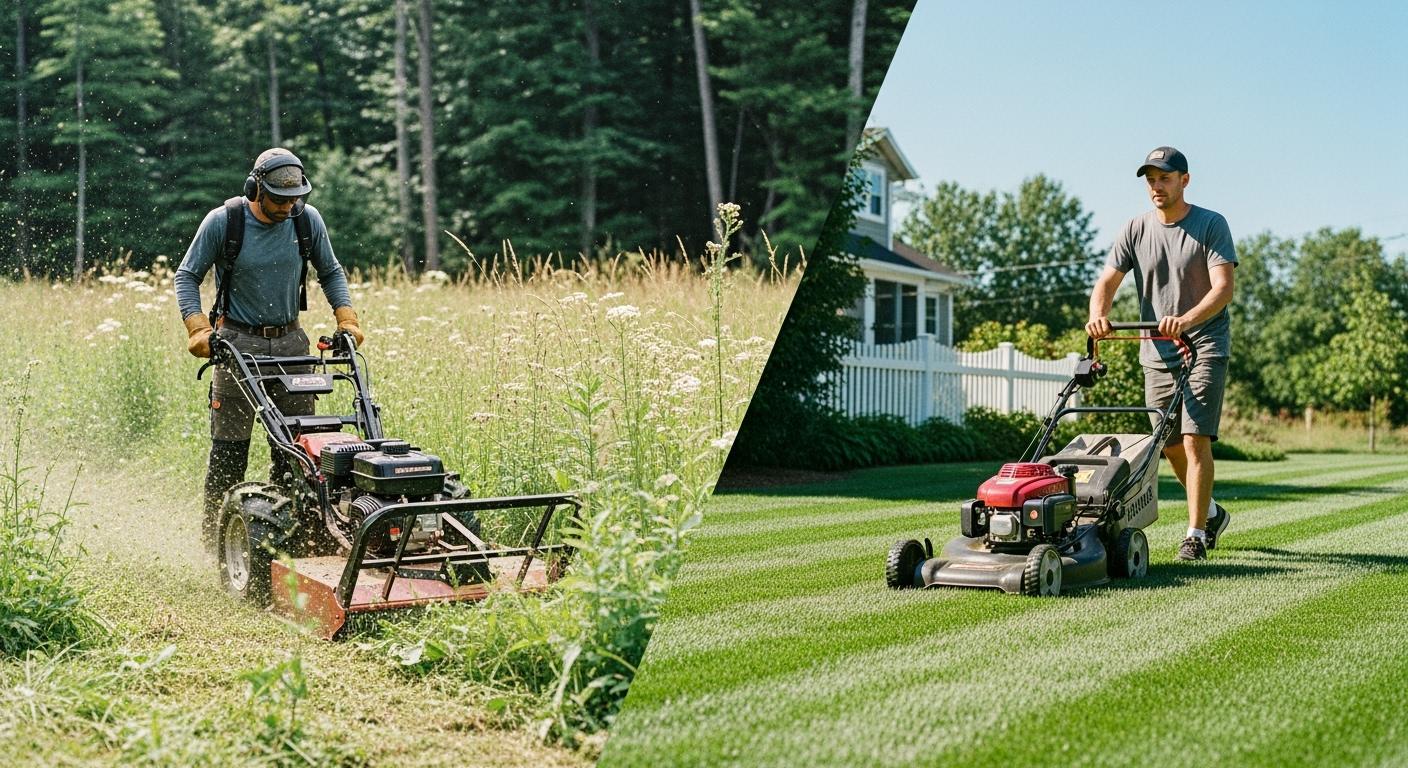
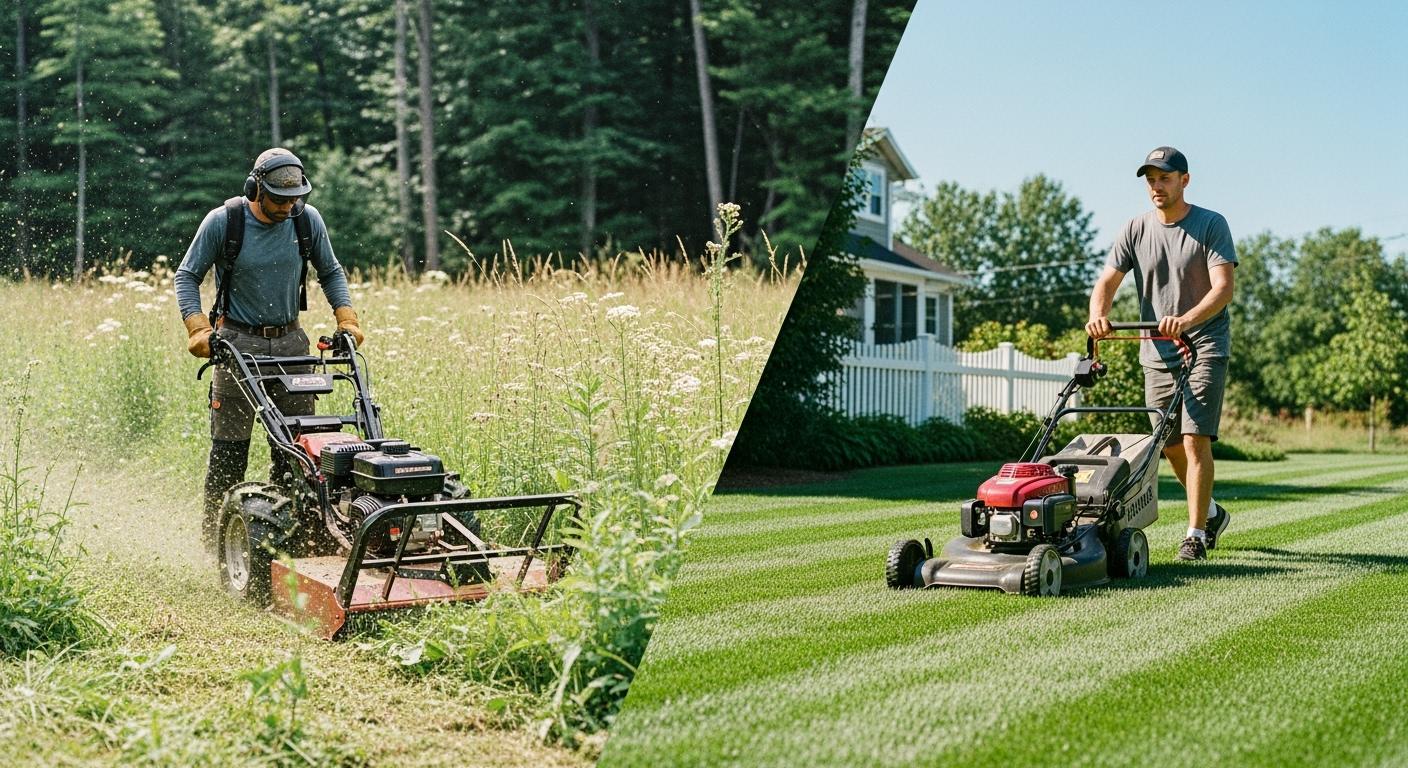
You need to pick the right mower for your land. A field and brush mower is best for thick plants and overgrown spots. If you need to clear steep hills or rough ground, use the DeepKron BW R/C Lawn Mower or DeepKron F80 R/C Flail Lawn Mower. For big grassy fields, the DeepKron R55 R/C Lawn Mower cuts well and is strong. Choosing the right mower keeps you safe and helps you finish faster. Check this table to see how each mower type changes safety and how fast you can cut:
Mower Type |
Efficiency (Time to Cut) |
Safety Detection Rate |
|---|---|---|
Battery-powered manual |
Faster |
N/A |
Gas-powered manual |
Faster |
N/A |
Battery-powered autonomous |
Slower (33.7 min/acre) |
93.8% (RGB cameras) |
Gas-powered autonomous |
Slower |
61.8% (Radar system) |
New ideas from DeepKron make it easier to work on hard land.
Key Takeaways
Choose a field and brush mower for thick plants and rough terrain. It handles tough jobs better than a lawn mower.
Use a lawn mower for smooth, flat areas. It provides a clean cut and is ideal for regular grass maintenance.
Consider remote control mowers like the DeepKron R55 for steep slopes. They enhance safety and efficiency while mowing.
Field and Brush Mower vs. Lawn Mower
Design and Power Differences
When you look at a field and brush mower and a lawn mower, you notice big differences in how they are built and how much power they have. A field and brush mower uses a strong frame and heavy-duty parts. This design helps you handle thick plants and rough ground. A lawn mower has a lighter build and works best on smooth, grassy areas.
Here is a table to help you see the main design features:
Feature |
Lawn Mower |
Brush Mower |
|---|---|---|
Purpose |
Designed for cutting grass on flat surfaces |
Designed for dense, tough, and overgrown vegetation |
Cutting Ability |
Uses rotating blades for a clean cut at a set height |
Uses robust mechanisms for cutting through thick plants |
Cutting Mechanism |
Typically has horizontal rotating blades |
Can have various attachments like metal blades or nylon line |
Terrain Suitability |
Best for flat areas like lawns and parks |
Suitable for rough, uneven terrain and thick undergrowth |
You also see a big difference in engine power. A field and brush mower often comes with engines rated at 10.5 to 15.5 horsepower. These engines let you cut through saplings, tall grass, and thick weeds. A lawn mower usually has less power because it only needs to cut regular grass.
Terrain and Vegetation Types
You should choose your mower based on the type of land and plants you have. If your land has thick brush, tall weeds, or uneven ground, a field and brush mower works best. This machine is made to handle tough jobs. It can move over bumpy ground and cut through dense plants without getting stuck.
A lawn mower is a good choice for smooth, flat lawns or parks. It gives you a neat cut on short grass. If you try to use a lawn mower on rough land or in thick brush, you may damage the machine or get poor results. Field and brush mowers are engineered for thick brush and uneven ground. They work much better than a regular lawn mower in these conditions. You can trust a field and brush mower to clear overgrown areas and keep your land safe and tidy.
Tip: If you have a mix of flat lawns and wild, overgrown spots, you may need both types of mowers for the best results.
Finish and Results
The finish you get from each mower is different. A lawn mower gives you a smooth, even cut. It uses a fast blade speed, around 3000 rpm, to make your grass look neat. The wheels on a lawn mower help it follow the shape of your lawn for a clean finish.
A field and brush mower is built for power, not for looks. It uses a gear-driven system and a slower blade speed, usually between 1000 and 1500 rpm. This cutting mechanism lets you chop through thick brush and tall weeds, but the cut is not as smooth as a lawn mower. You may see rough edges or uneven patches, but you will clear the land quickly and safely.
Brush mowers use strong gear-driven systems for tough jobs.
Lawn mowers use lighter belt drives and faster blades for a sharp, clean cut.
Finish mowers have wheels for a smooth result, while brush mowers focus on clearing rough ground.
When you pick between a field and brush mower and a lawn mower, think about your land, the plants you need to cut, and the finish you want. The right tool gives you the best cutting mechanism and helps you keep your property in top shape.
Use Cases for Field and Brush Mowers
Overgrown Land and Brush
It is hard to clear thick brush and wild plants. Field and brush mowers can cut areas that lawn mowers cannot. These machines chop small tree trunks, tall weeds, and vines easily. You save time and energy instead of pulling weeds by hand. Hand tools work for small spots, but not for big jobs. Using a machine helps you finish faster and cover more land.
Field and brush mowers help stop harmful plants from spreading. You can use them to keep your land healthy as part of a pest plan.
You get better results with a field and brush mower in wild places. The mower cuts thick plants and makes your land safer and easier to care for.
Steep Slopes and Rough Terrain
Mowing on steep hills and rough ground is risky. You need special machines to stay safe and work well. Field and brush mowers with remote control let you mow from a safe spot. You do not slip or fall, which stops many injuries. Remote-controlled mowers make you less tired during long work. You do not have to bend or move as much, so you feel better.
Always check your machine’s slope rating and do not go over it.
Pick up sticks and rocks before mowing to stay safe.
Mow up and down the hill for better grip.
Safety tools like emergency stops, winches, and rollover bars keep you safe. Taking care of blades and controls helps your mower last longer. Camera feeds and maps help you see better and make fewer mistakes. Field and brush mowers let you cut steep hills and rough land without worry.
Lawn Mower Applications
Residential Lawns and Parks
You see many types of lawn mower when you care for residential lawns and parks. Each lawn mower fits a different need. For small, flat lawns, you use manual reel mowers or electric push mowers. Medium lawns work well with self-propelled or battery-powered lawn mower models. Large lawns with obstacles need zero-turn lawn mower or riding lawn mower options. Hilly terrain calls for self-propelled lawn mower with rear-wheel drive. Here is a quick list of common lawn mower types you might use:
Self-propelled lawn mower
Push lawn mower
Hand lawn mower
Four-wheel lawn mower
Rear roller lawn mower
Hover lawn mower
Rotary cut lawn mower
Cylinder cut lawn mower
Ride-on lawn mower
Out front lawn mower
Zero turn lawn mower
A lawn mower helps you keep grass at a healthy height. Regular mowing with a lawn mower keeps turf strong and stops thatch from building up. You also make parks safer because a lawn mower clears paths and keeps signs easy to see. Mowing with a lawn mower improves soil health and helps the whole landscape look better.
Regular Grass Maintenance
You need a lawn mower for regular grass maintenance. Most lawns need mowing every seven to ten days during the growing season. If you keep your grass short, you mow more often. Always follow the rule of one-third: never cut more than one-third of the grass height in one mowing. The type of grass changes which lawn mower works best. Cool season grasses like Kentucky bluegrass grow fast and need a powerful lawn mower. Warm season grasses such as Bermuda grass do well with rotary push or riding lawn mower. Tall grass like Fescue may need a reel lawn mower for an even cut. Using the right lawn mower keeps your lawn healthy and makes lawn maintenance easier.
Comparing Brush Cutter, Flail Mower, and Rotary Mower

When you choose a mower, you want to know how each type works. The brush cutter, flail mower, and rotary mower all have different strengths. You can use them for different jobs on your land.
Brush Cutter for Dense Vegetation
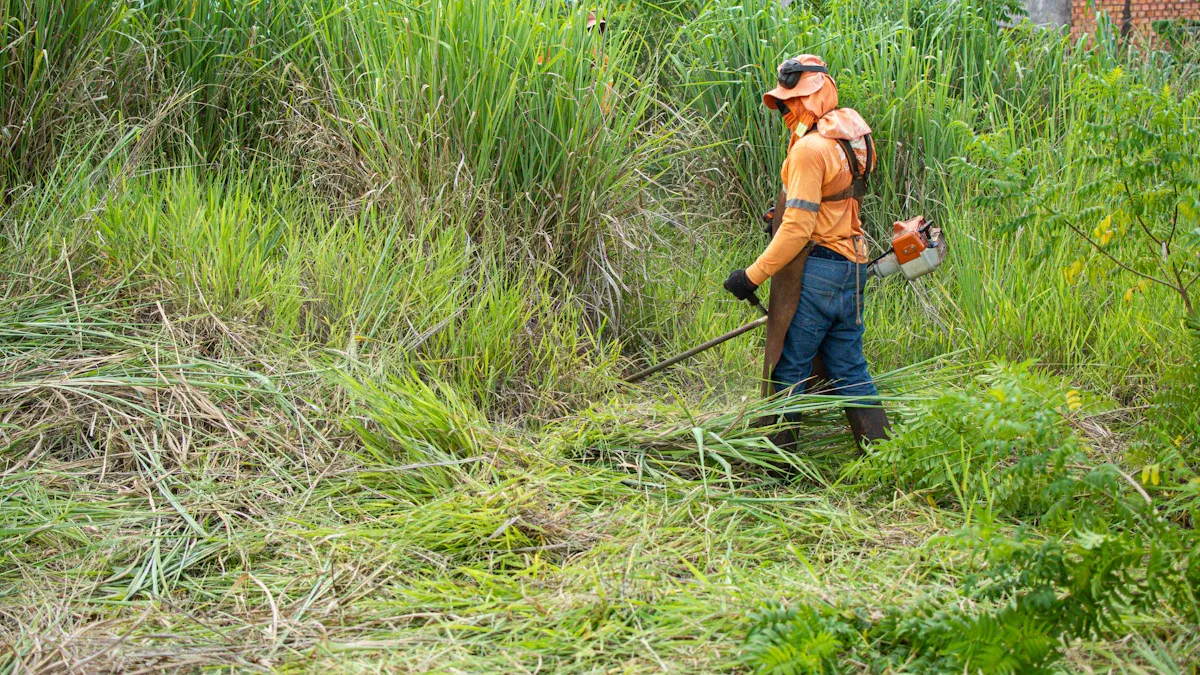
You use a brush cutter when you need to clear thick weeds, tall grass, and small saplings. The brush cutter has a strong blade or line that slices through tough plants. You can walk behind a brush cutter or use a remote control model for safety. The brush cutter works well in tight spots and around obstacles. You can trust a brush cutter to cut where other machines cannot reach. If you have wild growth or overgrown corners, the brush cutter is your best tool. You can use a brush cutter to clear fence lines, ditches, and trails. The brush cutter gives you control and power for dense vegetation.
Flail Mower for Heavy Brush
You pick a flail mower for heavy brush and thick plants. The flail mower uses a spinning drum with many blades or teeth. These blades chop and mulch plants as you move. The flail mower works well on tall grass, brambles, and even small trees. You can see the flail mower in action on rough ground and uneven land. The flail mower uses a belt-driven system, which helps you move around obstacles. You can offset the flail mower for better access to hard-to-reach spots. The flail mower gives you a fine mulch and leaves the ground smooth. You can use the flail mower for fields, orchards, and roadside work. The flail mower is safe because it keeps debris low to the ground.
Type of Mower |
Cutting Mechanism Description |
Key Differences |
|---|---|---|
Flail Mowers |
Utilize a large drum that spins, cutting and mulching vegetation with various tooth types. |
Belt-driven mechanism allows for flexibility and maneuverability, can offset for better access. |
Rotary Mowers |
Directly driven by a PTO shaft, providing a different cutting action. |
Less flexibility compared to flail mowers, typically offers a different finish and cutting style. |
You can use a flail mower for many types of heavy brush:
Tall grass
Brambles
Small trees
Rotary Mower for Large Areas
You use a rotary mower when you need to cut large, open spaces. The rotary mower has a fast-spinning blade that covers wide ground quickly. You can use a rotary mower on flat fields, parks, and sports grounds. The rotary mower gives you speed and simple maintenance. You can cover more land in less time with a rotary mower. The rotary mower does not mulch as finely as a flail mower, but it works well for regular grass cutting. You should know that the rotary mower can throw debris, so you need to check the area first. The rotary mower is best for open, flat land where you want to finish fast.
Feature |
Rotary Mowers |
Flail Mowers |
Sickle Bar Mowers |
|---|---|---|---|
Fast and effective |
Better for uneven terrain |
Excels in flat hay fields |
|
Maintenance |
Simple mechanics = less maintenance |
More complex mechanics |
Moderate maintenance |
Cut Quality |
Rougher cut compared to flail mowers |
Finer mulch |
Clean cuts |
Risk |
High risk of flying debris |
Lower risk |
Lower risk |
Tip: Choose a brush cutter for thick weeds, a flail mower for heavy brush, and a rotary mower for large, open areas. This way, you get the best results for your land.
DeepKron Solutions for Challenging Terrain
DeepKron R55 R/C Lawn Mower Features
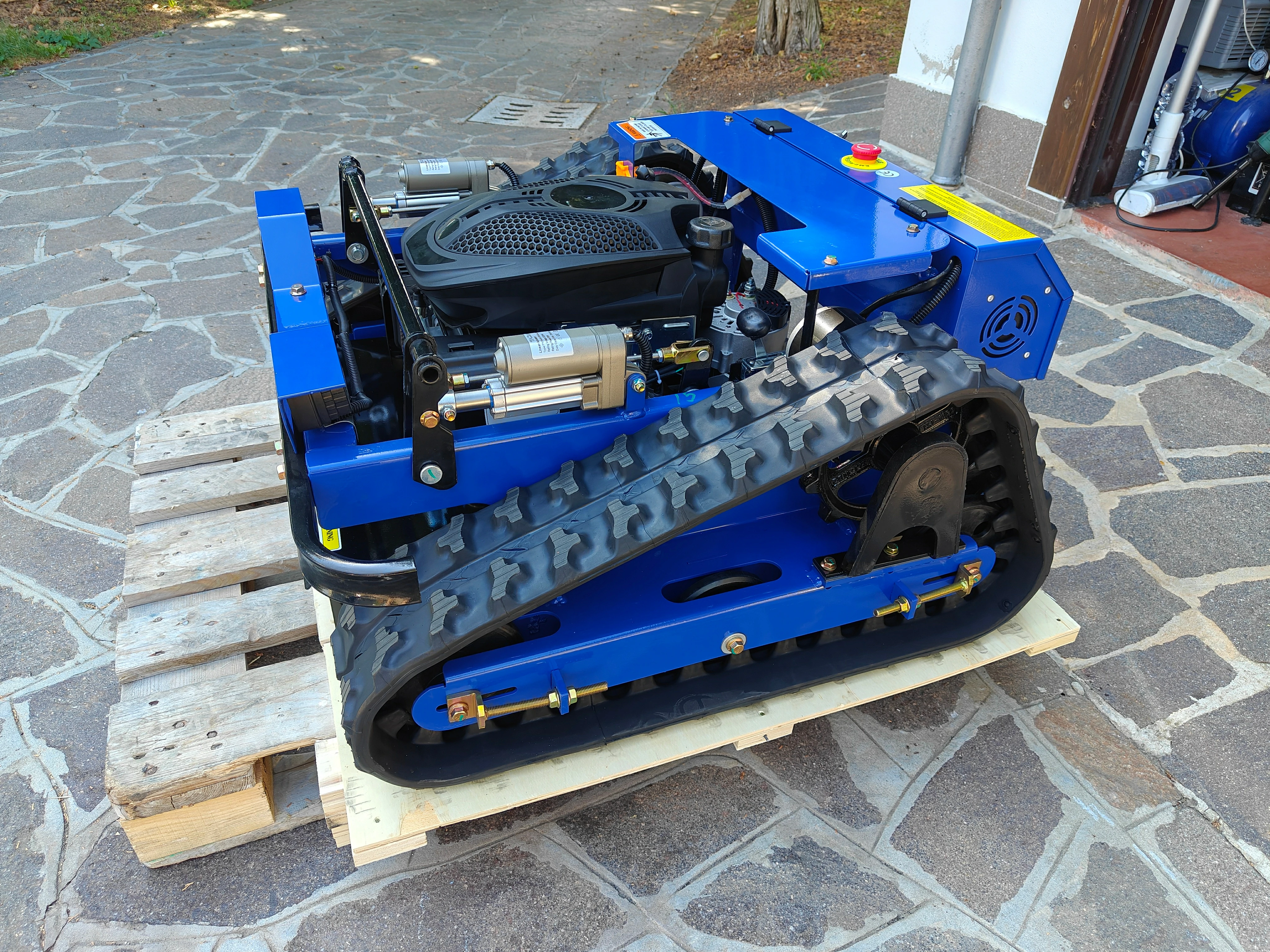
You want a mower that can handle tough jobs and keep you safe. The DeepKron R55 R/C Lawn Mower stands out with features that make mowing easier and safer for you.
You can operate the mower from a distance using a remote control.
The mower climbs steep slopes up to 45°, so you can clear hillsides and rough ground.
Safety comes first. The R55 has a tilt sensor that stops the blades if the mower tilts too far.
Emergency stop buttons are on both the mower and the remote, giving you quick control in any situation.
You save time because the R55 can cut your mowing work by up to 75%.
The mower offers smart planning tools and better cutting compared to traditional models.
These features help you finish big jobs faster and with less effort. You get a machine that works hard and keeps you in control.
Advanced Remote Control Mowing
Remote control mowing changes how you work on challenging land. You stay safe because you do not need to walk on steep or slippery ground. The R55’s design keeps the mower stable, even on rough slopes.
You control the mower from a safe spot, so you avoid slips and falls.
You see the whole area better, which helps you steer around rocks and trees.
The mower’s emergency stop lets you react fast if you see a problem.
You can adjust safety settings to fit your needs.
Remote mowers like the R55 also help you work faster. You guide the mower instead of pushing it, so you feel less tired. The mower covers more ground in less time, making your work easier and more efficient.
Decision Guide: Choosing the Right Mower
Land and Vegetation Checklist
You need to look at your land before you pick a mower. Start by checking the size and shape of your property. Wide areas need a mower with a large deck. Steep hills or bumpy ground call for a machine built for tough terrain. You should also look at the plants growing on your land. Some mowers work better on thick brush, while others handle regular grass. Use this checklist to help you decide:
Measure the width of the mower deck for faster coverage.
Check if your land has flat, sloped, or uneven terrain.
Identify the type of vegetation: grass, weeds, brush, or small trees.
Tip: If you see lots of brush or saplings, a flail mower or brush cutter will work best.
Maintenance and Budget Factors
You want a mower that fits your budget and is easy to care for. Field and brush mowers need more regular maintenance, like sharpening blades and changing oil. Lawn mowers usually have simpler repairs. Look at the table below to compare:
Type of Mower |
Maintenance Requirements |
Budget Considerations |
|---|---|---|
Field and Brush Mowers |
Regular blade sharpening and oil changes |
Higher upfront cost, but better for big jobs |
Lawn Mowers |
Simple repairs and less frequent maintenance |
Lower initial price, but check total ownership costs |
Upgrading to reliable equipment can save you money over time. You can sell or trade in old machines to help pay for new ones.
When to Upgrade to DeepKron
You should think about upgrading when your current mower cannot handle your land or takes too long to finish the job. If you have steep slopes, thick brush, or large areas, DeepKron’s remote control mowers offer better safety and efficiency. You get more power, longer run time, and advanced features that make mowing easier. Upgrading helps you work faster and keeps your land looking its best.
Safety and Legal Tips
Safe Operation Practices
You need to follow safe practices every time you use a field and brush mower or a lawn mower. These steps help you avoid accidents and keep your land in good shape. Here are important safety tips you should always remember:
Walk through your yard and remove sticks, rocks, and other debris before you start mowing.
Watch your surroundings. Stop mowing if someone comes near your work area.
Teach young operators how to use the mower safely before they start.
Set up a no-play zone around the mowing area to keep children and pets safe.
Never let anyone ride on the mower with you.
When you mow on a slope, move up and down the hill instead of side to side.
Wear safety gear like sturdy shoes and eye protection.
Check your mower for loose parts or damage before each use.
Tip: Regular maintenance and careful checks help your mower last longer and work better.
Local Regulations
Lawn mowers and field mowers must meet certain safety standards. You should know the rules in your area before you start mowing. Some important points include:
The Code of Federal Regulations (CFR) sets safety rules for walk-behind power lawn mowers under PART 1205.
These rules require clear labels and safety features to lower the risk of injury from mower blades.
Mowers with a cutting width of 30 inches or more, weighing over 200 pounds, or with engines above 8 horsepower do not fall under this standard.
Always check your local laws and follow manufacturer guidelines to stay safe and legal.
Brush mowers and lawn mowers are very different. Brush mowers do hard work on rough ground. Lawn mowers are good for smooth grass.
Feature |
Brush Mower |
Lawn Mower |
|---|---|---|
10–20 HP |
2–6 HP |
|
Terrain Suitability |
Wet, muddy, dense |
Well-maintained |
Vegetation Capability |
Weeds, saplings |
Grass only |
Pick DeepKron if you want remote control and strong cutting. You can use it all year. Using safe tools helps you take care of your land fast.
FAQ
How do you know which mower fits your land?
You check your land size, slope, and plant types. Field and brush mowers work for thick brush. Lawn mowers work for regular grass.
Can you use a field and brush mower on a lawn?
You can use it, but the cut will look rough. Lawn mowers give you a smooth finish for grass.
What makes DeepKron remote control mowers safer?
You control the mower from a distance. Emergency stop buttons and tilt sensors help you avoid accidents.
Share:
What Makes the DeepKron R55 the Best Choice for Steep Slopes
How to Identify the Best Situations for Using a Flail Mower